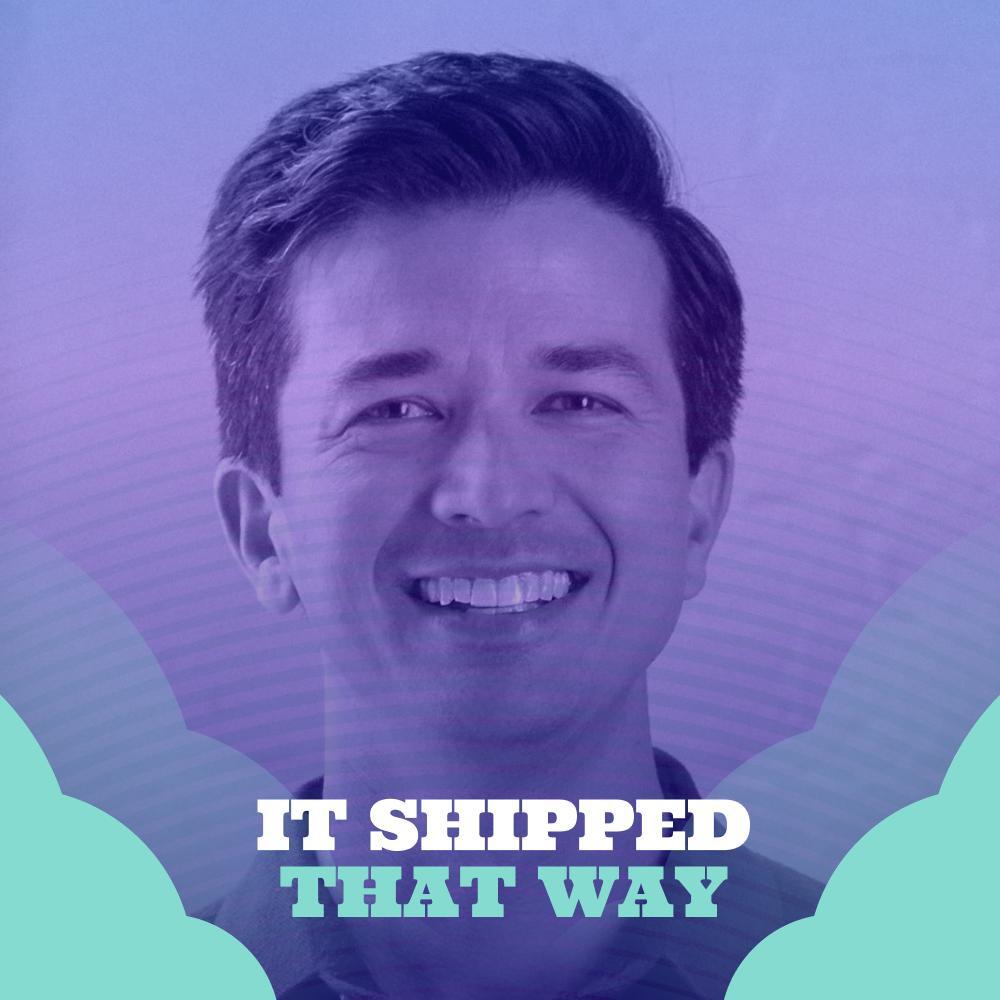
Speed and Quality are Complementary, with Wealthsimple Co-Founder Brett Huneycutt
Ep 35
Jan 07, 2026 • 42 min


Allen: Welcome to It Shipped That Way, where we talk to product leaders about the lessons they’ve learned helping build great products and teams. I’m Allen Pike, and today’s interview is with Brett Huneycutt. Brett is co-founder and chief product officer of Wealthsimple, one of the most delightful and fastest growing FinTech companies out there, now used by over three million people and counting. Welcome, Brett.
Brett: Thanks for having me, Allen.
Allen: I am really excited to have this conversation as a founder, and also as a client of Wealthsimple to go behind the scenes a bit, and figure out some of the things that you’ve learned building now for more than a decade, and taking something that probably as builders we all aspire to do, which is take something that is actually really complicated, and then make it seem simple to users. I think that’s kind of what we’re all trying to do.
Brett: Yeah. Awesome. Excited to dig in.
Allen: So where I like to start, before we get into the tactics, and approaches and lessons, I want to give you a chance to summarize a bit, give the Brett Huneycutt story so far. How do we get here?
Brett: So maybe a few themes to just mention and emphasize. One, I come from a fairly humble beginning, where I think money was a source of anxiety and stress for my family growing up. I generally find it to be very satisfying and fulfilling to work in financial services, and to really help our customers achieve the financial goals that they want. So just a bit about my background, I was born in Las Vegas to a Taiwanese immigrant woman. I was adopted when I was a few months old, and then mostly grew up with a single mother in Phoenix, Arizona. I was fortunate enough to be pretty smart and good at school, so used academic success to be a propeller in my life. Got scholarships to high school, and college, and graduate school. I think that was a big unlock for me. Another theme for me as a person, I’ve always loved computers. Got my first computer in 1986 when I was five years old. Tandy 1000 EX, IBM compatible.
Allen: Nice.
Brett: 64 kilobytes of RAM, no hard drive. And spent a lot of my youth and adolescence hacking on computers, building my own computers.
Allen: I think I had that almost exact same computer with all the… I don’t know for sure if it was 64K, because I had it, I was really quite young. The display with it was black and amber, not even black and white. Not sure which display that the one that you’re talking about came with.
Brett: Yeah, yeah, definitely not a color display. And then just sort of grew up online, and then era of dial up internet, and bulletin boards, and newsgroups, and then America Online, an early creature of the internet. And then maybe the third theme is, I’ve always been very entrepreneurial. Started my first business in high school, selling burned CDs with MP3s I downloaded.
Allen: Copyright not intended.
Brett: Exactly. To friends in high school to make some extra money, and buy the CD burner that my friends wanted to buy. So that’s a bit about my early background. In terms of my tech background, started my career at McKinsey & Company, was there for two years in both New York and Mexico City, but then quickly realized I wanted to do something more entrepreneurial. And so in the beginning of 2010, moved to San Francisco with a couple of good buddies. I started my first company, it was a company called 1000Memories. We built a few different products. We were talking about pivots earlier, but built a few different products in the family history space. Was an incredibly formative experience for me. I went through Y Combinator. I taught myself how to program professionally. So spent a lot of time building our website, our mobile apps, raised some money, and then was eventually acquired by the leader in the space, ancestry.com. And that’s kind of what led me to Wealthsimple. We made a little bit of money for the first time in our lives, and was not sure how to invest it, and turned to this young Canadian guy who we worked with, and had become a friend, who had long been interested in personal finance. And he suggested the ETFs that we should buy on the Vanguard website. I think we saw that process was complicated, and confusing, and somewhat stressful. I think, at the same time, we as a group collectively wanted to keep working together. That’s what led to Wealthsimple.
Allen: So we’re going to dig into the Wealthsimple stuff, and there’s so much there. Something that’s interesting about that path is this touch on YC, which, my bias is currently an early stage founder that is not NYC, we spend… Me and my co-founder will sometimes think about, “Okay, well, what’s the default Y Combinator way of doing this?” I have a little printout of the pocket guide of Y Combinator advice that they have on the desk.
Brett: Oh, wow. Okay.
Allen: Probably not familiar with the exact points. You’re well past the size of company that they advise on some of this from. But I’m curious, that was obviously a formative thing, you took some things away from Y Combinator, including some of your co-founders in the next venture, which ended up not, as I understand it, being a Y Combinator venture, in Wealthsimple. Were there any big lessons or takeaways you took from the program that folks that maybe don’t go through Y Combinator either, because they’ve joined a company post Y Combinator, or they’re founding on their own path that still stick with you?
Brett: There’s a lot. I’ve had the good fortune of having many amazing educational experiences in my life. As an example, I was a Rhodes Scholar, and studied economics at Oxford for two years, and got a master’s in economics, but hands down, Y Combinator was by far the best learning experience of my life. And so I think that there were many, many lessons. I haven’t taken a look at that pocket guide of 51 lessons-
Allen: This is not a quiz.
Brett: … that you come up with, so I’ll need to… Yeah, maybe we can talk through them, and some of the things that you’re using for your business now. But the motto of YC, of course, is make something that people want. I think it’s incredibly powerful advice for businesses at, really, any stage. The core thing they teach you at YC is you need to essentially do two things, which is talk to your users, and then build products that solve their problems. And I think all great businesses do those two things really, really well. And of course, Wealthsimple scaled, we’re now 1,500 people, but at the core essence of what we do, we do those two things as much as possible, and try to do them really, really well. There are some others that really stick out as well. Paul Graham wrote this essay, Startup Equals Growth. I think there’s a lot of wisdom in that essay, so it would recommend the listeners go read that and check it out. I think the best way to tell, I think, if you’re really building something that users want is that it’s going to grow each week. They’re going to like the experience, they’re going to tell their family and friends about it, and it’s going to grow. What we really try to focus on and measure at the company, especially with our new products, is not some particular, like, where we’re at in terms of number of customers, or number of dollars, but how much it’s growing each week. It’s an incredibly powerful, I think, forcing function for teams to understand if what they’re shipping is really delivering value that’s showing up in terms of how customers use the product, and want to recommend it to their family and friends. So that’s another really powerful one.
Allen: Yeah, and that weekly mindset is something a lot of startups that are either not in Y Combinator or not in the Bay Area sometimes are surprised by when you hear someone who is in YC, or has gone through it talk in terms of, like, “Okay, well, what’s your weekly growth rate?” And they’re like, “I mean, I have a monthly number.” That’s a long cycle. If you don’t have a business yet, you have no revenue or whatever, your thing hasn’t gotten scale yet, then it’s like… And we’re just making decisions once a month, how are you going to win like that?
Brett: Yeah.
Allen: But it’s a mental model that a lot of larger organizations slowly atrophy into thinking monthly, and then quarterly, and then… I was talking to a founder the other day who was saying, “Well, I have this really great lead.” And that they’re excited for their next planning cycle, but that’s every 18 months at this company.
Brett: This has obviously changed over the course of the last 11 years. In the early days, right after we launched, we had a big whiteboard in the office, and we would write the names of every new customer that we got each week on our whiteboard. And one week it was 10, and the next week we tried to make it 15, and the next week we tried to make it 20. But I think that behavior, while it doesn’t exist on the whiteboard anymore, we still really try to embody that spirit and that essence. So that’s something that’s really top of mind for me. There’s a bunch of others we can go into.
Allen: Yeah, we could probably do a whole episode on that, maybe we should one day. One thing I’m curious about though, to maybe put a little bookend on the YC-specific stuff, so you’d mentioned the size of your company is in the one to 2,000 people size, is that correct?
Brett: Yeah, 1,500 people.
Allen: What’s the size of the engineering product design org?
Brett: We have about 500 people in R&D, software engineering, data science, product management, product design.
Allen: Right. So that’s way past Dunbar’s number. You have people working together in theory that don’t even know each other, have maybe never even seen each other’s names before, but you’re all, in theory, pulling in the same direction. You’re all in theory, you have one of these Wealthsimple culture pillars of ship it, which very much aligns with YCombinator. The very first thing on the YC pocket guide is launch now, which is this push to, how do we ship things as fast as possible and get real customer feedback? How have you adapted that? Because quote “launch now” is slightly maybe harder to do when you’re a $100 billion of assets under advisement, you’re a regulated financial product with millions of users. How do you adapted to continue that directionally as you’ve grown?
Brett: The launch now advice is interesting. We got that advice directly from Paul Graham in a one-on-one at about week four of our YC journey. We had started building the prototype of our initial product for 1000Memories, and I think as almost all first time founders do, we had just built… We were trying to build too many features at once, and so the advice of launching now is, I think, the right advice at the time, because you just automatically have to cut a bunch of the features that actually don’t really matter, and just launch the core thing, and start to get feedback on that. The way we have adopted it is that we still actually try to get to the earliest version of our prototypes, really the alpha product that we have, something that will work in the simplest possible way, maybe not everything’s automated. We will try to get to that as quickly as possible. So we want one client, usually an internal team member, to be able to perform one action for the new feature, and we want to get that done as soon as possible. And the reason why is that it usually uncovers unknown unknowns. So we’re trying to do something in our system, like we’re trying to… I don’t know. We built options over the last couple of years, we want to trade the first complex option. We’ll do that in one person’s account, and see what breaks. And then we’ll sort of, I think, follow the launch now in increasingly large concentric circles of users. So one of the, I think, really great advantages that we have now as a 1,500 person or so company offering clients to consumers in Canada is that our team members are all customers of Wealthsimple, and so we have this built-in beta testing group, which is awesome.
Allen: Right.
Brett: And so our second stage to follow this launch now advice will be to go out to our team members. And so we have a huge practice of dogfooding, especially our early products, providing really great feedback, and then we’ll just keep expanding from there. So we have recently launched an alpha feedback group of 200 of our biggest fans who explicitly want to test early versions of Wealthsimple products, and we have set up Slack groups with them, so we’re talking to them every day, and getting their feedback, and that’s been an amazing way too. So I think we’ve really tried to continue to embody this ethos of launch now. The fundamental insight there, which I think is not obvious to early founders, is that you want to set up some sort of feedback loop with your users as early as possible to understand if what you’re working on is going in the right direction, and what you might’ve gotten wrong.
Allen: Yeah, and you’ve highlighted there one of the classic startup tropes, which is that if you can dogfood… Or some people don’t like the word dogfood anymore, but if you can be using the thing, if you can… Of course, Wealthsimple is a much nicer product than food for dogs, but if you’re going to be using your own thing, then you’re going to learn way faster.
Brett: Is there a new word for dogfooding?
Allen: I’ve heard a bunch of euphemisms, but that people have different… Either other pithy phrases, or they’re just like, “Using our own product internally.” And they’re just like, “We don’t like the word dogfooding.” The original idea way back in the day, and it might even been Microsoft that originally popularized this idea of it, is before it’s good, before we would be proud to serve this, you should be uncomfortably early using it. And one of the things I think is lacking on some teams, and I think really helpful for, I’m curious if this is something you’ve seen in your experience, is pushing yourselves or stretching yourselves to be like, “Well, maybe I wouldn’t normally trade options, but I’d be open to.” Or, “I’d be curious to.” You don’t want to push your employees and say, “Hey, you have to spend your own money on options.” But people who really care about products I found, whatever kind of product it is, are able to stretch their brain, and be like, “You know what? Maybe I am going to redesign my house, because we’re a house rearchitecture software company, and so I’m just going to develop an interest in that, and do it more.” And then people are enthusiastic about the product domain. Is that something that you’ve seen, or you do anything to foster that, or you just naturally end up with employees that are interested in finance and different finance products?
Brett: This is something that we’ve actually really focused on, and so it’s not as big of a problem for products that have a really wide mass appeal. So our checking account, our credit card.
Allen: Yes, everybody has one pretty much.
Brett: Yeah, exactly. Our basic investment products, all of our employees are in a position where they have one, they want one, they have opinions about how to make them better. Part of our growth has been, in addition to building financial products for everyone, we’ve also realized that we have a lot of active traders who love using us. And so in particular for products that we’re building geared towards active traders, we found it’s really, really helpful for us to recruit people who not only are great at their craft of software development, or product design, or whatever it may be, but also just love trading. Things just go better when that’s the case. And it hasn’t always been the case, so we’ve actively looked for amazing people, and brought amazing designers, and engineers, and PMs in our team who love trading, and it’s made a big difference.
Allen: Yeah, that makes a lot of sense.
Brett: I would say, also, for certain types of products and certain types of use cases, we’ve found that opening it up for the team is not really a sufficient way to get feedback, and that’s where this alpha group with our customers has been especially helpful, and that’s where beta testing with slightly larger groups of customers can help too.
Allen: Yeah, that makes sense. Something that’s really dangerous is when you have a whole team that builds a thing, and they sort of put it through its paces by clicking around, and they’re like, “I don’t know, it seems good.” But of course, they designed it, so they think it makes sense, but if they’re not actually really using it, or maybe they can’t… Something I’ve always been fascinated about with Wealthsimple, and I guess increasingly so as you launch more and more products now, as you were mentioning, you’ve got credit cards, you’ve got checking, you’ve got savings, there’s a mortgage piece now, there’s both this velocity that you have in terms of shipping things and also increasing breadth. But at the same time, maybe counterintuitively to that, you’ve always had this very high bar for user experience and delight, and that’s something that comes across, and I think has been a substantial competitive advantage as you come from nowhere, and you’re trying to build trust, you’re trying to… The goal of the business is to be the largest financial institution in Canada, and then the world… Implicitly. The path to gaining trust, such that people will trust you with a trillion dollars over time, it’s not obvious how to do that, and I feel like that, I don’t want to say craft, craft is a little word, but it feels like craft in the product of making it really nice contributes to that, but also the stereotype is that that slows you down, that keeps you from shipping. Of course, you can give a team, most teams, give them a whole bunch of time to polish every detail and corner, and a lot of teams would love to do that and not ship this new feature for another year to make every single corner case polished off, but you have this tension. So are there any specific mindsets or tactics that you use for trying to keep a high bar on both that quality, delight, user experience piece, and the ship now, ship uncomfortably early, get customer feedback, early piece when those things… A lot of people will tend to argue while their intension, which one do you want? Do you want it to be fast, or do you want it to be good? And it seems like your organizational thing is, “Well, it’s going to be both.
Brett: Yeah. I find that in practice, in my experience, speed and quality are much more complementary than at odds. And so the way that you actually make products great is you get to early versions of them with limited scope, and get them in your own hands, and in the hands of your users, and you craft them and you polish them over time, and that’s the way they become truly, truly excellent. I think the anti-pattern is to work on something for months on end, and not get it in the hands of the users, and then rush to ship it out to a bunch of clients, and then you end up with something that no one likes, and is kind of crappy, and it doesn’t work. I’m not sure it’s speed per se, as much as it is iteration, and the cycle time between those iterations. That’s the really important piece. That’s the thing that comes to mind first. I really believe that the quality of our user experience is a reflection of the care, and the craft, and the attention to detail that we want to… We want our customers to know that’s also how we treat their money. And so I think it’s a very subtle but important mindset to instill in our team. There’s so much that goes into building, I think, trust with our customers, from our brand, the way we talk to our customers. Not only the care, and the craft, and the UX details, but also just making sure that everything works incredibly fast, and seamlessly, and exceeds our customers’ expectations. That’s another huge piece of it as well. So really, I think the work of the entire company comes to bear when it comes to really building upon the trust we’ve been able to establish in the marketplace already, and I think we’ll continue to build over the years and the decades to come.
Allen: Yeah, it’s interesting, maybe so much of it ends up being the culture that you develop, and the people that you recruit and retain that maybe do or don’t care, or are and aren’t motivated by some of those things. So you say something that I think is very true, and increasingly, I hear people actually make this argument explicitly as opposed to it just being arcane knowledge, that speed is quality, because if it takes a really long time to ship something, it takes a really long time to fix something, or figure out that it’s bad. You see a lot of organizations that have a culture where they really prioritize that speed, and they say speed to try things, and to A/B test stuff, and put things out there, and see if they’re building the right thing, and be very like, “The customer will tell us.” And then that leads to a culture where once something is deployed, and customers are using it, and then the data says, “Oh, well, not a lot of people are using this thing.” Then there can be a, “Okay, well, then we don’t want to invest in polishing that. Even though we’re fast, we could maybe quickly polish it, but we don’t want to polish a thing that not a lot of people are using.” Which of course maybe contributes to maybe people not using it if it’s kind of janky. But how do you think about… Obviously, maybe partly it’s the water you’re swimming in, where you recruit and retain a whole bunch of people who care about polishing this thing, so of course, we’re going to actually… There’s a feature in someone’s backlog or their list, which is, “Oh, this dialogue animates poorly when it animates in and out.” And it’s like, “Is that going to move a metric? I don’t know. Is that the core thing? Does that help us ship anything faster? Not necessarily.” But it’s like painting the back of the cabinet, or painting the front of the cabinet, in my opinion, because you see those animations all the time. But certainly, I’m sure there’s some people… When you’re pushing people to ship it, do you ever have people on your team that are like, “Wow, I mean, we could ship faster if we weren’t doing all these little polished things.” Or is that completely just the water you’re all swimming, you’re naturally by the people you have on your team that people, of course, prioritize that stuff?
Brett: This is a challenge that we’re facing, and I think we’re still addressing. When I use our website, and when I use our mobile apps, I see a million things that I wish were better, and so I think in general, that we can do much better all of these different dimensions. And in some ways what I care about the most is how much that we’re able to improve over time, and I am pretty proud of how, I think, our… The breadth of our service offering, the quality of the experience that we deliver is improving. So I think that makes me very bullish and optimistic about our future. But I don’t think we’ve fully nailed this yet, and we’ll continue to get better. Maybe just a couple of things that came to mind as you were asking the question that I’ll share is… And maybe going back to the original question about Paul Graham, ship today, I think one of the things that we emphasize is fast to play test, slow to GA. We want to get a working prototype in someone’s hands as fast as possible, but we want to take the time over the course of a beta process in order to really polish a feature before it goes out to all of our customers, and so I think that’s been helpful. I think the other thing that’s been really helpful too, where we’ll really start to see dividends be paid over time is, it’s a little bit like what I was describing with our team that’s building features for active traders, we really want designers and engineers who love working together, and love polishing UIs to get the level of quality you want on the front end. I think we have built an enormously talented team there too. I don’t think we’re quite yet where we want to be in terms of our product and market, but I’m really excited about what’s going to be shipping over the months ahead. One example of this, we acquired this amazing little team called Fey that’s been working on products for advanced traders on their own, and they came to Wealthsimple a few months ago, and have started working on our website, and they’re just doing amazing work, very excited about the work they’re doing. But yeah, more to come from us on this.
Allen: Yeah, and that part about fast play test and slow to GA I think is… My instinct is that’s a big contributor, because the organizations that I’ve worked in and with that have had the biggest challenge on velocity at the sacrifice of polish… Obviously Apple has sometimes struggled to do both at once maybe famously, they either have velocity or polish, that willingness to say, “Well, we’re going to be using this internally, and then we’re going to roll it out in stages.” I’ll touch on this actually, you have these events that you’ve started doing early, I’ve only been aware of them last year or so, this Wealthsimple Presents, where you take a keynote slot basically, and you say, “Hey…” And you promo in the app even, like, “Hey, you’re going to come and see us and announce a bunch of new features.” Which is not the way that other financial institutions are rolling out new stuff, or at least I… Maybe they have them, but I’m not getting any visibility on those, to do a fun, energetic, “Here’s a bunch of new stuff.” Launch. How does that interact with all this stuff? Because on one hand, it’s fun as a client get to see the stuff. And of course, as the company is doing broader and broader stuff, there’s more and more, like, “Oh, we can fill in this gap.” It’s like, “Oh, we had never had this, but obviously you would want the ability to deposit a check.” It’s like, “Okay, we have that now.” It’s like, “Okay, great.” Filling in all these things. If you’re to say, “We’re going to be everything, we’re going to replace a bank, of course we’re going to need all these things.” It’s fun to see those gaps be filled. Does it make it easier or harder to do that process where you’re taking your time to roll it out in concentric circles when you’re like, “Okay, we’re going to have these 12 things. We’re going to announce them all on stage, and people are going to be hyped for them”?
Brett: Yeah, so we’ve done two of them. We did, I think in May, one called The End of Banking, where we talked about our new checking account that we launched, our credit card, some other payments features. And then we did another one a couple months ago called For Nerds Only, which is focused on investing broadly, but both some active trader stuff and some more passive investor stuff. I think those events were wildly successful, much more so than maybe we had even anticipated. We had live, in-person audience of 500, and then I think 700 of some of our oldest customers that have been with us now over the last 10 plus years, which has been awesome, and then we’ve had a couple hundred thousand viewers watch the YouTube of each of it. So it’s pretty cool, I think, to know that there’s so much interest from our clients, and understanding what we’re launching. I think it’s been useful in a few surprising ways. So one, it’s an interesting way to us essentially prioritize a bit. So we’re able to understand from the feedback that customers… What they are most excited about, and to make sure that we do that really well and really fast, and so that’s been useful. But I think the biggest surprise for us has been… It’s been an incredibly effective and motivating thing for our team broadly. And so after each of the events, we’ve thrown big parties in the office, everyone comes together, I think everyone’s just really hyped about what we’re doing, which I think has been really cool. And then I also think that it’s been a useful forcing function in terms of a deadline for teams to get things done. For better or for worse, we are a collection of human beings, and it turns out that human beings really respond to goals.
Allen: Yes.
Brett: I don’t know if you’ve seen, there’s this meme on Twitter about the distribution of marathon finishing times, and there’s this incredible clustering around two hours 30 minutes, three hours, three… People tend to achieve the goals that they set for themselves.
Allen: Yes.
Brett: And so I think there’s been a really useful mechanic there. We have, of course, I think tried to announce as many products that actually go live at those events as possible, but in a few cases, I think when things aren’t ready, we’ve also felt comfortable either not mentioning them at the event, or mentioning that they’re going to be coming at some point in the future when they’re ready to. So I don’t think it’s totally disrupted our process, it’s been in general a great thing.
Allen: That’s a really important muscle to keep, because you see this happen with organizations that get… The overconfidence is like, “Okay, we’re going to announce it at this day.” And like I say organizations, I’m particularly familiar with the Apple’s approach to it, but they’re not unique in this in any way, whereas there’s this pressure to launch on this thing. And then of course when you’re launching so many things all simultaneously, then the teams are strained, and all the various things that go into trying to launch this stuff simultaneously, and you lose some of that, I think, critical rolling out in concentric layers thing, and so I think that’s a… I don’t know. As a client, I hope you keep on that diligence of, “You know what? This thing’s not fully baked yet. We’re just going to tease it, or say that we’re working on it, or that it’s in beta, or whatever.” And not feel like we have to be like, “All these 27 things are all now live on this one second.” And then hoping they’re not lighting on fire.
Brett: Yeah. Yeah, yeah. Agreed. Agreed.
Allen: One of the things I heard in my research talking to folks who’ve worked with you is that you’re really thoughtful about data, which is interesting to me, because some product companies, you see the product and you’re like, “Well, of course this is a data-driven product because it kind of sucks.” Like Amazon, you used Amazon. Amazon is a great product in some ways, but it’s not delightful, it’s just a bunch of crap on the screen that’s mathematically most likely to make me buy of things, which is not the way that Wealthsimple feels as a product. So I’m really curious to hear, when you’re doing this kind of work, where do you find data is the most helpful to you? And do you encourage teams to focus in on letting that steer what you’re doing, what you’re prioritizing, how you’re working? Versus when intuition and taste need to be the factor, where it’s like, “Yeah, maybe this data is misleading, or it’s pushing us in a direction that ultimately is not going to actually have the right long-term affordances.
Brett: Yeah. I mean, I think this question sort of drives at why building products is so much fun. It’s this combination of data and analytical thinking, with taste and creativity, and beauty, which I personally find really exciting, and an amazing space to work in. I have always loved numbers. Math has always been a strong suit. I thought I was going to be a PhD in economics before I realized that entrepreneurship was the right path for me. I think there are lots of great places where we can use numbers to really drive our thinking and to really drive clarity. Maybe just to mention a couple of very tangible examples, I think with all of our money transfer mechanisms and payments mechanisms that we offer in app, one of the primary ways that we grow is, our customers decide that they want to move over their investment account from another financial institution to us. There are several different ways that this can happen, there’s a system in Canada called ATON that does it in a fairly automated way, but then there’s lots of other institutions that require us to, for instance, send a fax on behalf of our clients.
Allen: Oh my God. It’s 2025.
Brett: Yeah, exactly. Exactly.
Allen: But you don’t want clients to have to know about that. It’s just-
Brett: No. No, no, no. We don’t want clients to have to know about that. And so there’s a sea of numbers that we can order and provide structure to, and to really optimize to make sure their institutional transfers happen as reliably and as quickly as possible. And similar logic, I think with like… I don’t know, we recently launched wires out and wires in both domestically and internationally. Of course, we also want to deliver an amazing, delightful, simple customer experience on the front end, but in terms of actually delivering the amazing, magical customer experience, it’s mostly about making sure these things happen on time and reliably all the time. So it’s just something where we need to really obsess about the numbers, and optimizing that machine.
Allen: So what I’m hearing there is, sometimes people will say… People will oversimplify and they’ll say, “Well…” They’ll either argue, “Well, data has to be the thing that’s helping us make product decisions and priorities.” Or they’ll say, “Taste and our intuition is what’s driving them, and what maybe…” It sounds like you’re saying is the further the experience, or the part of the chain is away from the customer actually touching it, the more that it’s a supporting structure of the eventual experience. The more we can just lean into, “Okay, well, what does the data say? The data says that this is slow, or this doesn’t work, or this doesn’t…” And then the closer it is to the actual button that I’m tapping with my finger, the more that we need to lean into that taste and intuition. Obviously data still matters about, “Okay, what are we going to launch.” Or, “Are we growing?” And stuff like that, but that’s… Is that part of the framing?
Brett: Yeah, yeah, exactly. I mean, data can be useful to inform our user experience, like, “Does the average customer have two accounts or four accounts? And therefore, how does that affect how we design our home screen of our products?” Or stuff like that. It can be useful to understand parameters and things, but I think that our design needs to be largely taste-driven. I myself am not a designer. I come from product management, having spent most of the last 10 years programming, I love beautiful things, and so place a high value on beauty and simplicity.
Allen: Yeah. I mean, it’s right in the name of the company, right?
Brett: Yeah, it is.
Allen: Couple last things I wanted to touch on. One is that it come up in some folks I’ve mentioned is something that, as I understand, that you like to do… Just try to hire people that you would want to work for.
Brett: And this is a Mark Zuckerbergism.
Allen: Oh, is it a Mark? I didn’t realize that. Tell me a little bit about how you came to that, and then maybe how do you try to assess out… Other than good vibes? Obviously, like, “Okay, I get along with this person.” Which is nice to have a group of people you all get along with, but if there’s anything that you find useful in trying to apply that, and where that comes from, and then how you try to apply that?
Brett: I have a tremendous amount of respect for Mark Zuckerberg as a founder, but this is one of my favorite Mark Zuckerberg quotes, and I should look up the exact language, but it’s something like, “I want to work with people that I myself would want to work for.” And I think it’s an interesting heuristic. I mean, I think it certainly is in some ways the more positive formation of the meme you hear about how A players hire A players, and B players hire C players. B players want to hire people that don’t threaten them in some way, and this is kind of the opposite of that, and I think positioned more positively, which is, you want to hire the best possible people you can imagine. I find that this is especially true as a founder. This is the first time that I’m working at a company with 1,500 people in it. I certainly don’t know all the answers, and it’s really, really important for us to hire to both grow internally, and I think primarily grow internally, but then also occasionally from time to time, hire the right senior executives who can really bring in the right type of mindset and experience from other places, and who I can learn from. So I think that’s a big thing. But I think some of the things that are top of mind for me, I look for ambition. I really want people who are hungry and want to win.
Allen: Winning is fun.
Brett: Winning is fun. I think there’s something about raw horsepower. In general, I think we lean on horsepower and capability much more than experience per se. We love to hire entrepreneurs, especially in our product organization we love to hire entrepreneurs, because the product management job itself is quite ambiguous, and depending upon the product you’re working on, and the particular point in the life cycle, you may need to do very, very different things. Whether that’s really diving deep on understanding the customer, or really diving deep on the regulatory environment, or, I don’t know, the data that you’re seeing coming out of the product. Maybe the one other thing that I think actually has really been important too as we’ve scaled is, you want to put together sets of people who get along and have complementary skills. I think especially in an R&D organization, you don’t want everyone to be cookie… You want people to bring a set of complementary experiences to the organization. As an example with our investing team, we recently brought on someone who’s been working in customer support for the last eight years, and we’ve paired him with another person who has been day trading over the last 10 years, some amazing design talent as well, and so getting groups of people who bring different things to the table, I think has also been really, really important.
Allen: Do you think of that explicitly when you’re hiring into a team? Obviously you have your underlying values doc somewhere, which is, “Here’s a thing that we especially like to see.” Like entrepreneurialism and things like that. But then do you sometimes, or often make explicit, like, “You know what? This team could really use someone who stirs the pot, or could really use someone who just is detail-oriented, or really use somebody who can help us be more ambitious.” Or whatever? Do you pull that out from time to time, as, “When we’re making this next hire, we’re maybe a little… Could use more of this because we have a lot of, I don’t know, seven people who are all full of ideas. We need to actually implement them all”?
Brett: Yeah. Yeah, yeah, for sure. No, for sure. My team might find this frustrating sometimes, but I’m also a big believer, especially with our product organization, you don’t want to hire someone just because you have an open role.
Allen: Yes.
Brett: I would much rather leave the role vacant until we find the right person. And then the flip side of that coin is that when we do meet great people, we should hire them even if we don’t have a role for them today, because we’ll inevitably have a role for them tomorrow.
Allen: Well, these are the huge benefits of being a growing company, is that you can do that and not be too nervous about it. Last question. I feel like we could dig into… Each one of these could be a podcast, maybe one day they will. I’ve heard that you like to give people to… Give them space to do their best work, but that sometimes you do like to go into the details. You are writing code, you care about beautiful products, you like to get into details sometimes. What details do you love getting into, or feel the most value of, “Oh, this is where I’m being helpful despite the standard advice of…” Even at a much smaller company as a CEO, sometimes I’m encouraging, “You can’t be in every detail.” What details do you love being in?
Brett: No, you certainly can’t be in every detail. I mean, what I tell my leaders, and where I myself think that I am most effective is when I can hold both the big picture of where we’re headed and what we’re trying to accomplish, and the basic steps that we need to get there. And then I personally like to really dig in. You certainly can’t dig on every detail, but I like to dig in as much as possible to understand our clients, to understand our data, to understand how our systems work. So I try to spend a day or two pair programming every month. It’s just something that I enjoy.
Allen: Nice.
Brett: I think in addition to understanding how our systems work at a detailed level, it also just gives me energy. And I think one of the things that we all need to do at work every day… Not every day, but on an ongoing basis, is to really find the things that give us energy and lean into those, because it’s very motivating. So that’s something that I definitely like to do. I’ll dig into our data warehouse from time to time and do my own analysis.
Allen: Nice.
Brett: One of the dangers, I think, of a 1,500-person organization is you can kind of end up in this murky middle of internal documents, and miss the forest from the tree, miss the big picture, but also still not really be honing in on what the real true problem or blocker is in a situation. And that’s where I find both operating at a very high level and operating at a very detailed level can ultimately increase output and solve problems.
Allen: Yeah, I love that. Getting in occasionally. But that thing you said about energy is so true, that energy then fuels you to do a bunch of other high leverage things that maybe aren’t the most fun things, but it’s really important for you to do these things, and doing some pair programming, digging in and actually answering a question, maybe some feedback on a button. It energizes that, and feeds it forward. Awesome. Well, thank you so much, Brett. This was delightful. Where can people go to learn more about you and your work?
Brett: Good question. Certainly feel free to visit wealthsimple.com. And you can find me on Twitter, I’m Brett Huneycutt on Twitter.
Allen: Nice. I’ll put a link to that in the show notes. Thank you so much for being on the show. Special thanks to Jordan Deutsch, Bell Espada, and Tim Kalaman for suggesting questions. It Shipped That Way was brought to you by SteamClock Software and Forrestwalk Labs. That’s it for today. You can give us feedback, follow us on social media, or rate the show by going to itshipped.fm/contact. Until next time, keep shipping.
Chat Isn’t Automation, with Zapier’s first PM, Chris Geoghegan